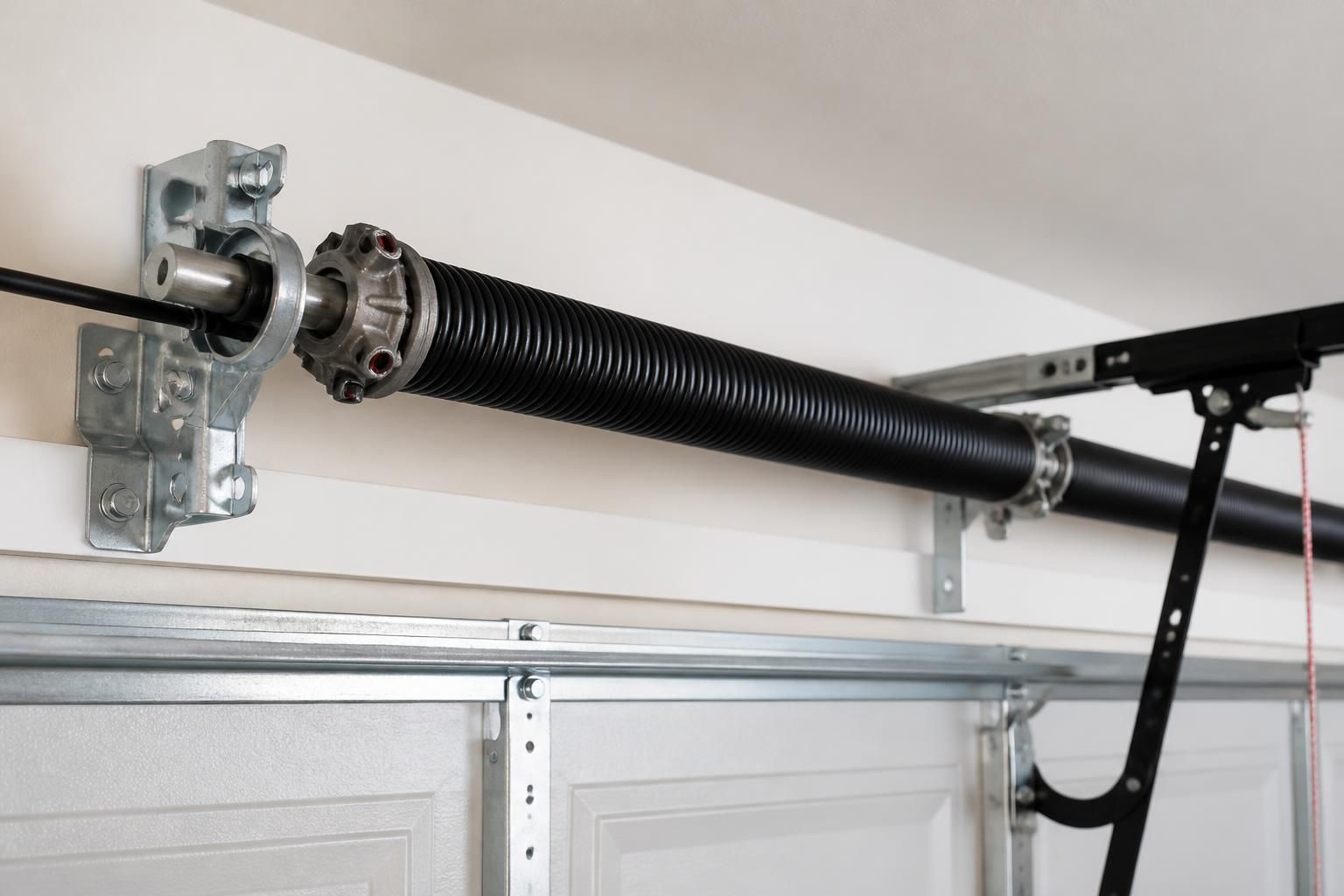
A garage door that suddenly feels heavy, jerks as it moves, or refuses to open often points to a worn or broken spring. You may hear a sharp snap, notice a visible gap in the spring, or see the door lift unevenly before it stalls.
When that happens at your Sacramento, CA home, the safest next step is to stop using the door and have it checked. Ironwood Garage Door replaces torsion and extension springs with the right fit for the door, then tests the balance so the system can move smoothly again.
Garage door springs carry the weight of the door, so the opener does not have to do all the work. When a spring wears out, the symptoms show up quickly and usually get worse the more the door is used.
If you notice one of these signs, the problem is usually more than a simple adjustment. The spring may need replacement before the door can be used safely again.
Springs are built for repeated cycles, but every open and close adds wear. Over time, the metal loses tension, and the door becomes harder to support. That wear can happen gradually, so many homeowners do not realize anything is wrong until the door starts acting differently.
Spring metal eventually fatigues. Even a door that has been used carefully will reach a point where the spring can no longer handle the load the way it once did.
If a door is out of balance, the springs work harder than they should. That extra strain can shorten spring life and make the whole system feel rough.
Problems with rollers, cables, tracks, or the opener can make the door operate under stress. When the system fights itself, the springs are often the first part to fail.
Ironwood Garage Door takes a practical approach to spring replacement for Sacramento, CA homeowners. We start by identifying the type of spring, the door size, and the condition of the surrounding hardware, then we replace the worn spring with one that matches the door’s needs.
This process helps restore normal movement while also reducing wear on the rest of the system.
Garage doors typically use one of two spring setups. The right choice depends on the door design and the hardware already installed.
Torsion springs are mounted above the door opening and help control lifting through a shaft system. They are common on many residential garage doors and are designed to provide balanced support during operation.
Extension springs stretch along the sides of the door and work with the door’s motion as it opens and closes. When these wear out, the door can become uneven or feel difficult to manage.
Matching the replacement spring to the existing system matters. A spring that is too strong or too weak can create new problems even if the broken part is gone.
Some spring failures are obvious, while others show up as smaller changes in how the door moves. Paying attention early can help you avoid more damage to the opener, cables, or panels.
When these signs start showing up, replacement is usually the most direct fix.
A garage door with a failing spring can place extra force on the opener and the rest of the hardware. That added stress can turn a spring issue into a larger repair if the door keeps being used.
Replacing the spring sooner also helps protect daily routines. If the door is a primary entry point, a sudden failure can interrupt leaving for work, bringing the car home, or accessing stored items. A quick response keeps the repair simple and helps the door return to normal use with less strain on the system.
Spring failure often appears alongside other wear points. During a replacement visit, we may find that a nearby part has been stressed and needs attention too.
Ironwood Garage Door keeps the focus on what the door needs right now, so you are not left with avoidable repeat problems.
While waiting for service, a few simple steps can help prevent more damage.
These steps are not a repair, but they can reduce further wear before the replacement is completed.
The door may feel very heavy, stop partway, or move unevenly. A loud snap and a visible break are also common signs.
It is not a good idea. The opener can be overworked when the spring is not carrying the door’s weight.
That depends on the door setup and wear level. If one spring has failed and the other shows similar fatigue, replacing both may make sense.
Timing depends on the door type, the spring setup, and whether nearby parts also need attention.
Usually, yes. Spring replacement is followed by balance checks so the door moves with even support.
Yes. We work with many residential garage door setups across Sacramento, CA and match the replacement to the door’s configuration.
If your garage door has a broken spring or feels unsafe to use, contact Ironwood Garage Door for spring replacement at your Sacramento, CA home. We provide clear recommendations, careful installation, and straightforward service by phone at +19165550105 or by email at hello@ironwoodgarage.example.
Get Started
Tell us what your garage door is doing, whether it is noisy, off track, slow to open, or ready for replacement. We will help you choose the right repair, replacement, or upgrade for your home.